Loading / 加载中...
Back to Industry SolutionsIndustry Solutions · SHIP LOCK PANORAMIC SURVEILLANCE
Ship Lock Panoramic Video System Solution
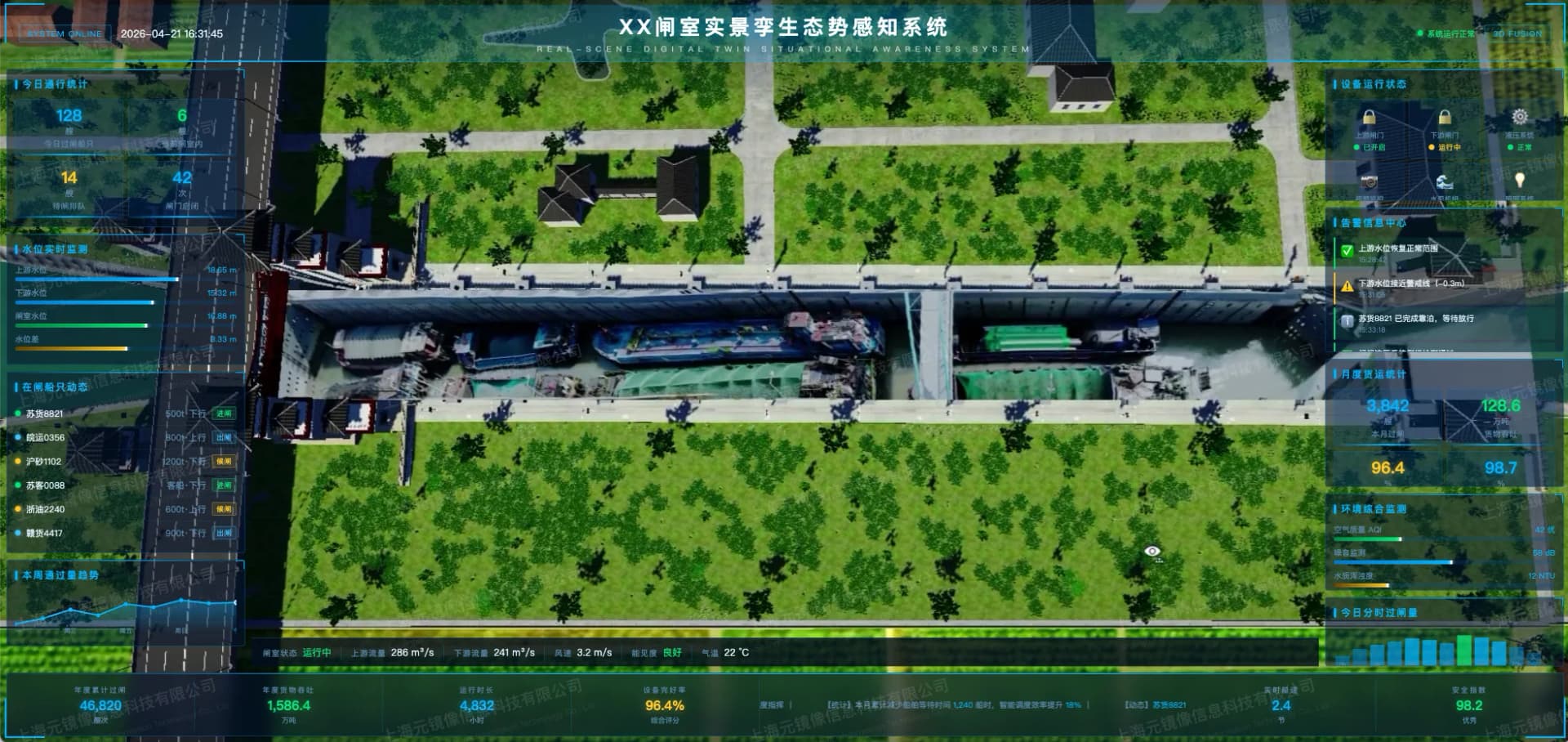
Video Stitching + Lock Chamber Business Integration + 3D Fusion · Building a One-Screen Supervision & Control View
Designed for lock chambers, head/tail bays, approach channels, and dispatch centers. The system upgradesdispersed video feeds into a continuous panorama, integrating with vessel transit, gate operation, water level, signal lights, broadcasting, and alert systems — enabling chamber supervision, dispatch confirmation, and control coordination all on one screen.
2D
Chamber Video Panorama
3D
Real-Scene Twin
Biz
Transit System Integration
Control
Supervision Coordination
Industry Pain Points
01
Narrow Long Lock Chamber
Lock chambers, approach channels, gates, dolphins, and culverts span long distances. Single cameras only capturelocal views, causing gaps in vessel entry, berthing, and exit monitoring.
02
Multi-Screen Fragmentation
Traditional surveillance displaysdispersed across multiple windows, requiring operators to switch between head bay, tail bay, chamber, machinery room, and water level views — creating high monitoring stress.
03
Disconnected Operations
Video feeds, transit declarations, vessel queuing, gate status, water level data, and dispatch instructions are spread across different systems, making it hard to synchronize on-site conditions with operational workflow.
04
Control Risk
Gate opening/closing, filling/emptying, release, broadcasting, and alertdisposal requires accurate confirmation of vessel position, personnel, equipment, and water level — but there is no coordinated lock chamber monitoring view.
Solution Overview
Lock Chamber Operation
Upgrade from "watching multiple videos" to "supervising and controlling by lock chamber operations"
The core of the lock chamber scenario is not simply widening the view — it is making the chamber operationprocesses supervisable, confirmable, and coordinated. Using panoramic video as the on-site foundation, the system integrates vessel entry/exit, berthing, gate operation, water level changes, signal release, and anomaly alerts into one business view, helping operators complete on-site confirmation before operations and form complete review evidence after disposal.
✓
Multi-Camera Stitching into Lock Chamber Panorama
Reuses cameras on both sides of the chamber, head/tail bays, and approach channels. After calibration, distortion correction, and fusion, outputs one continuous panoramic video.
✓
Lock Chamber Business Data Overlay
Integrates with vessel declaration, queuing, dispatch scheduling, gate status, water level, signal lights, broadcasting, and alert systems, overlaying operational status onto the panoramic view.
✓
Supervision & Control Coordination
Around entry confirmation, berth verification, gate operation, filling/emptying, release, and incident disposal, provides view positioning, status validation, and control coordination access points.
✓
Video & 3D Fusion
Registers real-time panoramic video with the lock chamber 3D model, creating a rotatable, locatable, business-data-enabled real-scene twin supervision interface.

Two Plans
Choose pure video stitching or add 3D fusion based on the lock construction phase. Both plans are designed around lock chamber business integration, supervision confirmation, and control coordination.
Plan One
Pure Video Stitching Lock Chamber Panorama
Ideal for projects prioritizing resolution of multi-view fragmentation, long-distance monitoring gaps, and dispatch center large-screen display. The system stitches multiple camera feeds into a 2D lock chamber panorama in real time, with vessel name, berthing position, gate, water level, and alert tag overlay.
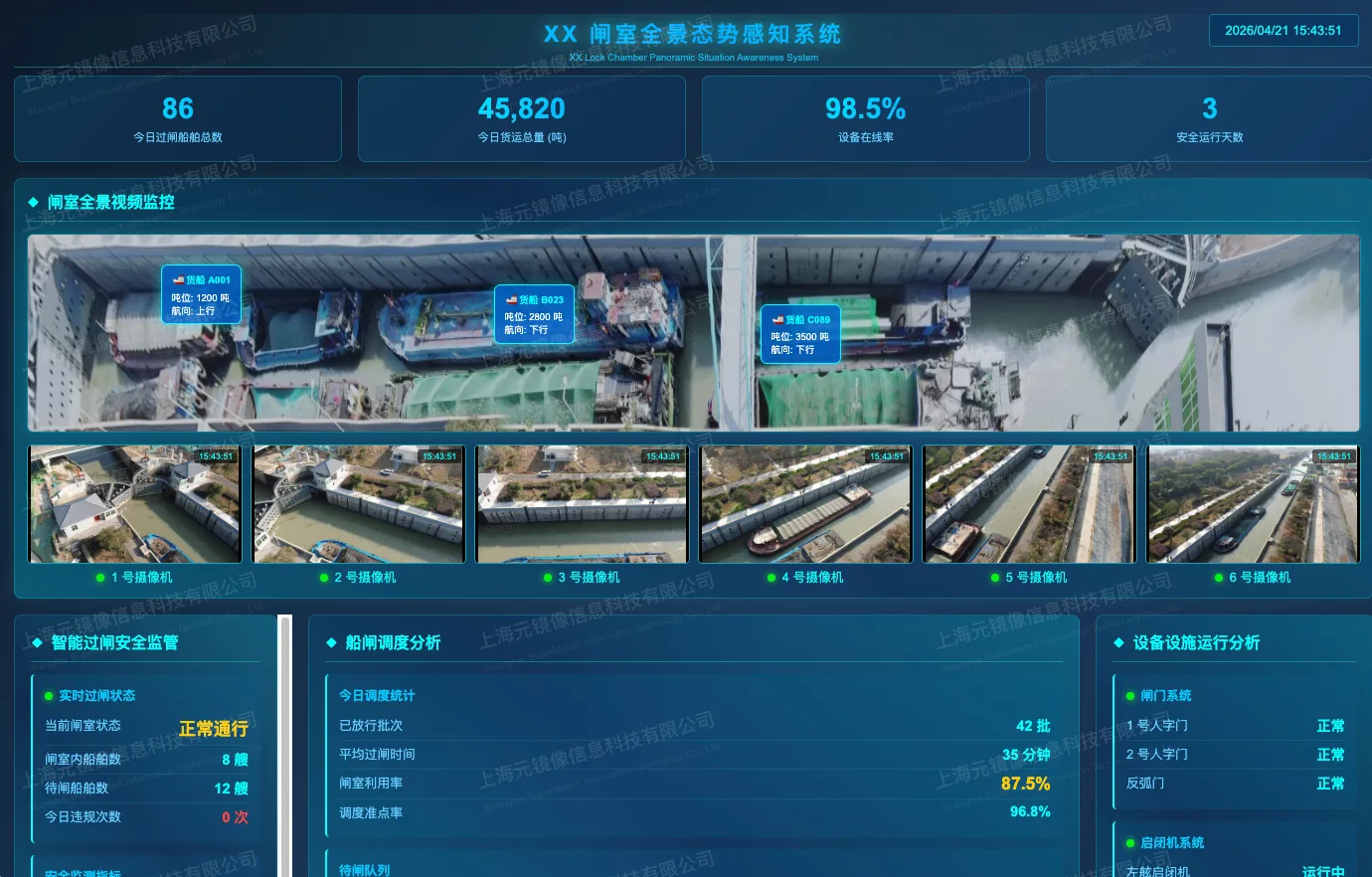
✓Multi-camera integration & real-time stitching
✓Long-distance continuous lock chamber panorama
✓Vessel & gate status overlay
✓Large-screen, VMS, and recording system output
Plan Two
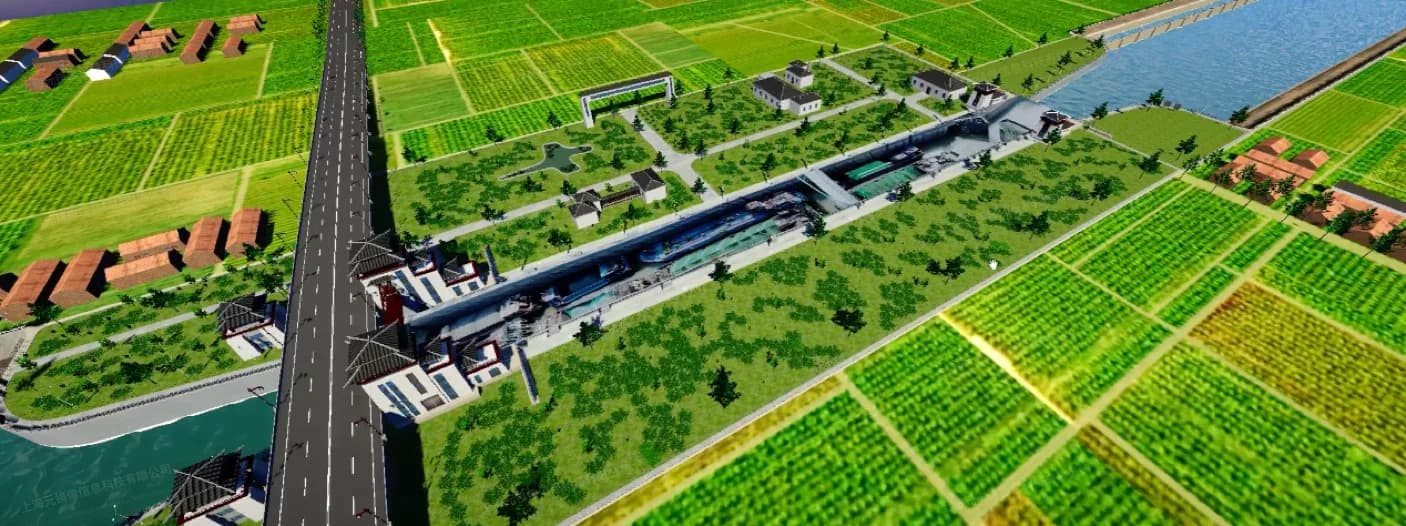
Video Stitching + 3D Fusion Lock Chamber Real-Scene Twin
Designed for smart lock projects requiring simultaneous monitoring of chamber space, electromechanical equipment, and operational workflow. The system projects panoramic video onto the 3D lock chamber model, binding real-time panoramic video, camera positions, gate equipment, water levels, vessel positions, andwarning zones into the same spatial coordinate system — giving spatial positioning capability to gates, vessels, water levels, equipment,warning zones, and dispatch status. Operators can zoom from overview into head bay, tail bay, or individual vessel details, completing gate operation, filling/emptying, and pre-release confirmation with business status context.
Business Integration
Business Integration
Integrated with lock chamber operational workflows
The system integrates with existing lock business systems through APIs, message services, or platform plugins, unifying transit plans, vessel status, electromechanical equipment status, and video spatial positions. Dispatchers are not just watching footage — they complete supervision confirmation, control verification, and incidentdisposal within the same view.
Vessel Declaration & Transit Scheduling
Vessel Queuing / Calling / Release
AIS / Beidou / Radar Target Information
Gate Opening/Closing & Limit Status
Upstream/Downstream Water Level & Filling/Emptying Status
Signal Lights / Broadcasting / Electronic Screens
Video Platform / NVR / VMS
Alerts, Work Orders & Event Review
01
Entry Monitoring
Continuously observe vessel entry into the lock chamber, berthing position, vessel spacing, and personnel activity on the panoramic view, assisting operators in confirming gate-closing conditions.
02
Gate Control Verification
Displays gate opening degree, limit status, audio/visual cues, and video feeds in coordination, reducingerrors and on-site confirmation costs.
03
Water Level & Vessel Position Coordination
Unified presentation of water level, filling/emptying status, and vessel position for assessing hull attitude, mooring line status, and chamber safety boundaries.
04
Release & Incident Response
Complete release confirmation combining panoramic video, signal lights, dispatch instructions, and alert status before vessel exit, with rapid incident location and playback.
Feature List
| Feature | Supported |
|---|---|
| Real-time stitching of multiple lock chamber cameras into one continuous panoramic video | ✓ |
| Simultaneous viewing of pre-stitching multi-camera feeds and post-stitching panoramic view | ✓ |
| Coordinated switching between 2D panorama, 3D panorama, and local camera feeds | ✓ |
| Integration with transit declaration, dispatch scheduling, queuing calling, and release information | ✓ |
| Integration with gate opening/closing, limit switches, signal lights, broadcasting, and electronic screen status | ✓ |
| Integration with upstream/downstream water levels, filling/emptying, pumping stations, and electromechanical equipment status | ✓ |
| Support for vessel name, position, heading, transit status, and risk tag overlay | ✓ |
| Support for chamberwarning lines, restricted zones, berthing positions, and key equipment annotation | ✓ |
| Support for anomaly alert pop-ups, video playback, event search, anddisposal closed loop | ✓ |
| Support for dispatch center large screens, operator workstations, and mobile remote viewing | ✓ |
Solution Value
✓
Upgradedispersed multi-camera monitoring to a single lock chamber panoramic view, reducing operator scanning and screen-switching burden
✓
Enable coordinated assessment of vessels, gates, water levels, signal lights, and dispatch operations on the same screen
✓
Strengthen visual verification of key steps: entry, gate closure, filling/emptying, gate opening, and release
✓
Reduce monitoring blind spots caused by head/tail bays, dolphins, culverts, and vessel obstructions
✓
Support gradual upgrades on existing monitoring and business systems, protecting legacy investment
✓
Accumulate panoramic video, 3D views, and business status evidence for review, training, and accountability
Get the Ship Lock Panoramic Video System Solution
Supporting lock chamber location assessment, video stitching debugging, 3D model registration, transit business system integration, and supervision control commissioning
Related Products